Moscow is not just the capital of Russia. It is its heart, its voice, its living legend. A city whose name dates back to ancient times — to the mysterious Finno-Ugric hydronym of the river on whose banks it grew — is today one of the largest and most dynamic metropolises in the world. Located in the very heart of the East European Plain, surrounded by rings of historic roads and modern highways, Moscow brings everything together: the past and the future, intimate antiquity and an ultra-modern rhythm of life.
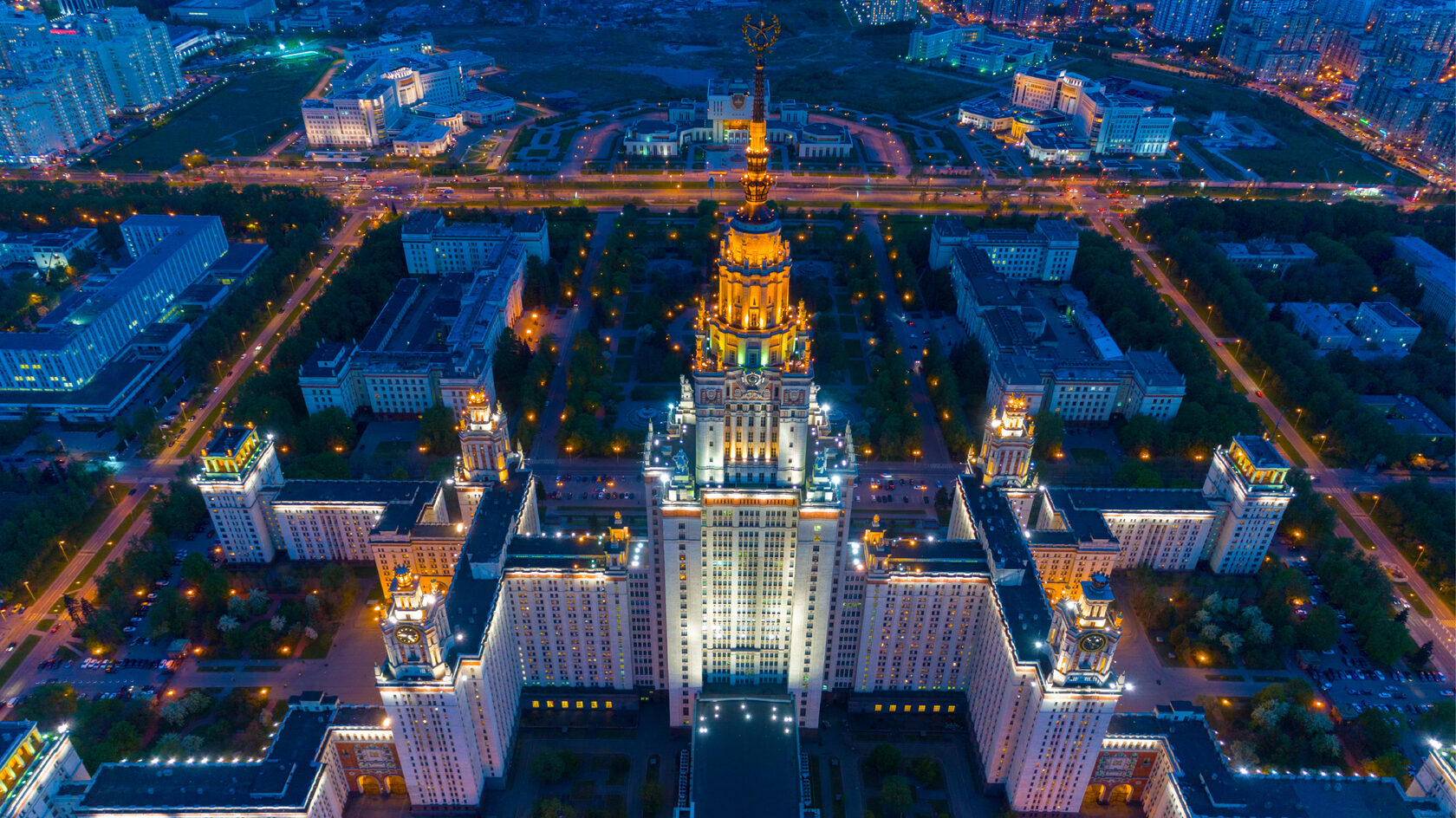
Moscow’s architecture is a symphony unto itself. Here, literally just a few steps apart, stand side by side white-stone churches from the 12th to 17th centuries, majestic Stalinist skyscrapers—those grandiose "Seven Sisters," soaring upward like monuments to an entire era—and the mirrored facades of ultra-modern business districts. Among these symbols of the city, the ensemble of Lomonosov Moscow State University holds a special place. It is within its walls that all rounds of the 60th International Mendeleev Chemistry Olympiad will take place.
Moscow does not choose between the past and the present—it encompasses everything at once. And this is not a contradiction, but an organic, living dialogue of the ages. At the very center of this dialogue stands the Moscow Kremlin—an ancient fortress that has become the heart not only of the city, but of the entire vast country. Its crenellated walls and the gilded domes of its cathedrals have witnessed so much history that any account of them would be but a brief reflection of it. And nearby lies Red Square, one of the most recognizable squares in the world, and on it stands St. Basil’s Cathedral—a true masterpiece of 16th-century Russian architecture. Its multicolored onion domes seem to have been conceived not by architects, but by a fairy tale itself—so incredible, festive, and unique are they. This silhouette is recognized on every continent, and for millions of people around the world, it is the face of Russia.
But Moscow is not just about monuments and history. It is a vibrant, pulsating city with a rich culinary culture. Here, in cozy restaurants and modern cafes, they serve hearty cabbage soup and velvety borscht, warming you from the very first spoonful, juicy pelmeni made according to recipes passed down through countless generations, delicate pancakes with caviar or sour cream, and, of course, the famous Olivier salad—a dish without which no Russian festive table is complete. Moscow’s gastronomy is a journey in itself,
capable of telling us just as much about Russia as its museums and cathedrals.
Moscow is a city that can never be fully explored. No matter how many times you return here, it reveals something new every time: a new alleyway with an ancient church, a new gallery, a new view from the Moscow River embankment at sunset. It is a city that lives life to the fullest—loud, vibrant, and fast-paced—yet retains the depth and soul that make it truly great.
Moscow awaits you!
Moscow’s architecture is a symphony unto itself. Here, literally just a few steps apart, stand side by side white-stone churches from the 12th to 17th centuries, majestic Stalinist skyscrapers—those grandiose "Seven Sisters," soaring upward like monuments to an entire era—and the mirrored facades of ultra-modern business districts. Among these symbols of the city, the ensemble of Lomonosov Moscow State University holds a special place. It is within its walls that all rounds of the 60th International Mendeleev Chemistry Olympiad will take place.
Moscow does not choose between the past and the present—it encompasses everything at once. And this is not a contradiction, but an organic, living dialogue of the ages. At the very center of this dialogue stands the Moscow Kremlin—an ancient fortress that has become the heart not only of the city, but of the entire vast country. Its crenellated walls and the gilded domes of its cathedrals have witnessed so much history that any account of them would be but a brief reflection of it. And nearby lies Red Square, one of the most recognizable squares in the world, and on it stands St. Basil’s Cathedral—a true masterpiece of 16th-century Russian architecture. Its multicolored onion domes seem to have been conceived not by architects, but by a fairy tale itself—so incredible, festive, and unique are they. This silhouette is recognized on every continent, and for millions of people around the world, it is the face of Russia.
But Moscow is not just about monuments and history. It is a vibrant, pulsating city with a rich culinary culture. Here, in cozy restaurants and modern cafes, they serve hearty cabbage soup and velvety borscht, warming you from the very first spoonful, juicy pelmeni made according to recipes passed down through countless generations, delicate pancakes with caviar or sour cream, and, of course, the famous Olivier salad—a dish without which no Russian festive table is complete. Moscow’s gastronomy is a journey in itself,
capable of telling us just as much about Russia as its museums and cathedrals.
Moscow is a city that can never be fully explored. No matter how many times you return here, it reveals something new every time: a new alleyway with an ancient church, a new gallery, a new view from the Moscow River embankment at sunset. It is a city that lives life to the fullest—loud, vibrant, and fast-paced—yet retains the depth and soul that make it truly great.
Moscow awaits you!