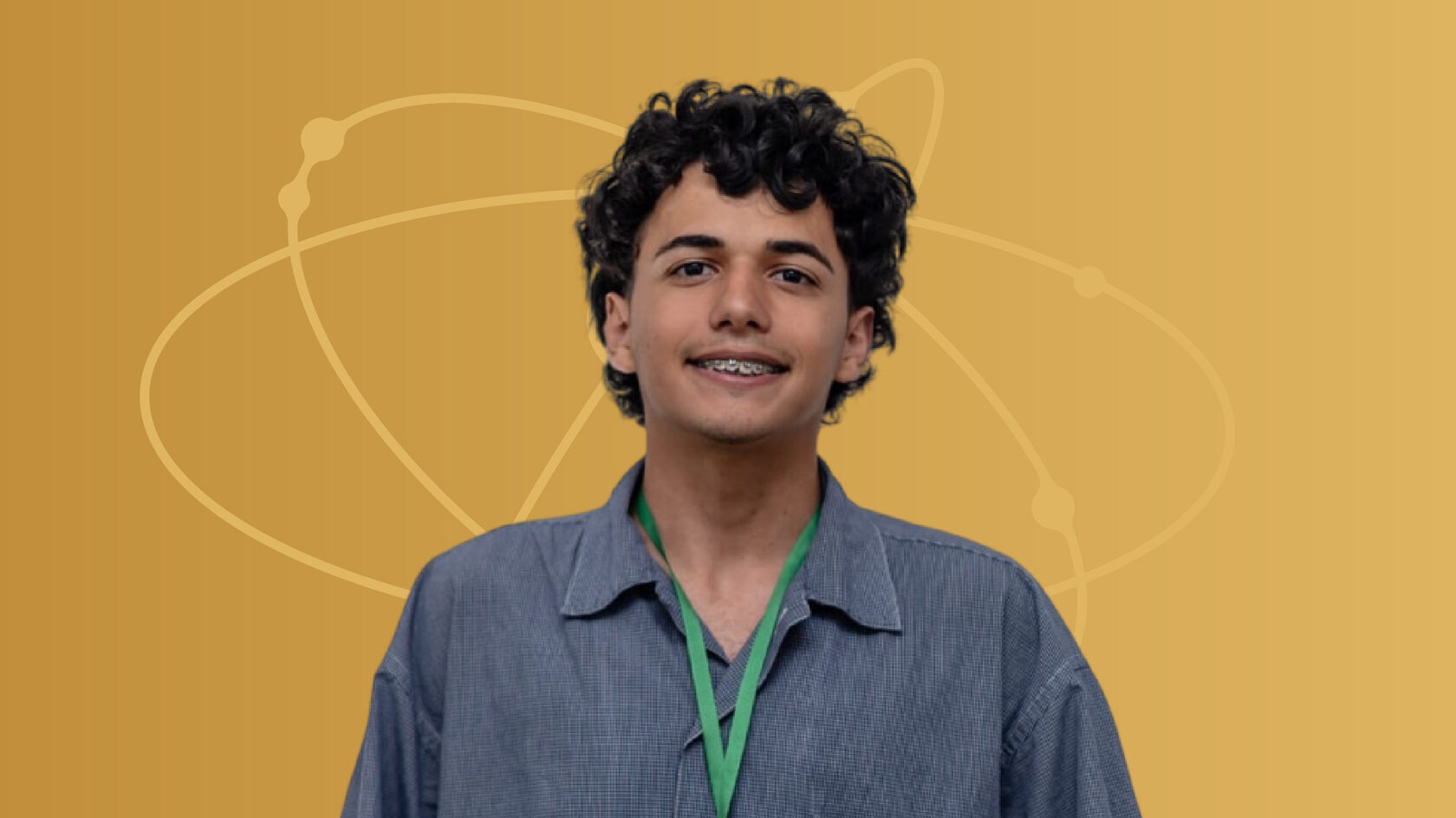
In the run-up to #IMChO60, we spoke with Juan Carlos Yepe Muñiz — a participant of last year’s Olympiad and one of Cuba’s first representatives at the MMO — about his journey into the world of chemistry and the unforgettable experience of competing on the international stage. Read the interview below!
How did you decide to participate in the Mendeleev Olympiad?
I’ve always been drawn to difficult challenges. It started with math, but when I discovered chemistry—what at first seemed like a simple fascination with the visual appeal of experiments—it turned into a passion for how this science helps explain the world. That’s how I began my Olympic journey, facing various challenges, growing alongside my teammates, and motivated by excellent teachers. Cuba participated in the Mendeleev Olympiad for the first time in 2024, and its reputation quickly spread among us. The colleagues who attended commented on the difficulty and rigor of the exams, which, far from causing fear, drew me toward the desire to compete in the event. I saw the competition as a unique opportunity to interact with diverse cultures, and to enjoy and learn from very interesting—and truly difficult—problems.
What are your impressions of the 59th Mendeleev Olympiad?
The 59th edition of the Olympiad, set against the picturesque landscapes of Minas Gerais, gave me a unique experience, rich in educational activities, exploration, and entertainment. I found the dynamics and characteristics of the exams to be peculiar—and no less interesting—compared to the competitions and selection tests I had faced before. But of course, it’s the content that really grabs you, with several tasks that seem impossible, keeping your eyes wide open for every question and letting your thoughts and creativity run free at all times.
What is your most vivid memory of last year’s Olympiad? Did you get to meet kids from other countries?
I will never forget the outing on May 9. First, the commemoration of Victory Day was moving and awe-inspiring, with a dignified tribute to the fallen who fought against fascism—a struggle that must never falter to this day. On the other hand, there was the visit to Ouro Preto, whose geography, beautiful colonial buildings, warm people, and cultural legacy demonstrated its value as a World Heritage Site.
Throughout all the activities, and in the run-up to the exams, I met students and teachers from various countries. I wasn’t shy about introducing myself to anyone I came across; I talked and learned from many, lost and won with some at pool, but with everyone I always shared a friendly and enriching space.
How did you relax between rounds of the Olympiad? Did you play sports or video games?
Between rounds, I did whatever activity helped me clear my mind and stay relaxed. Most of the time, I played pool with my teammates or other participants. Other times, I’d just go for a swim in the pool, try out the sauna, or simply chat for a while with my Latin American friends.
Where are you studying now?
I’m currently doing my mandatory military service, waiting until September to start my university studies. Whenever I have free time or am away from the unit, I try to use it to maintain my study habits and, if possible, help prepare future contestants from my country, as well as create problems for their training.
What do you plan to do next? Work in the scientific field?
My plans for the future include training to become a researcher. Although I find all areas of chemistry very appealing, drug development, biotechnology, and interdisciplinary study in inorganic and organic chemistry seem to be my main interests. I also plan to stay involved in teaching Olympiad students, following the example of my coaches, and helping everyone who is in the same position I was in.
What advice would you give to a high school student preparing to participate in the Mendeleev Olympiad?
I recommend staying curious, enjoying the process, building a broad general knowledge base, reading articles, and watching documentaries and educational videos, since the Olympiad often references real-world facts related to everyday life. Apart from that, discipline in studying will always be necessary for those who are preparing, but they must never neglect taking care of themselves: socializing, exercising or playing sports, sleeping well, and meditating are practices that, even though they don’t involve books or notebooks, will be of vital importance to learning—and, even more importantly, to one’s own well-being.
How did you decide to participate in the Mendeleev Olympiad?
I’ve always been drawn to difficult challenges. It started with math, but when I discovered chemistry—what at first seemed like a simple fascination with the visual appeal of experiments—it turned into a passion for how this science helps explain the world. That’s how I began my Olympic journey, facing various challenges, growing alongside my teammates, and motivated by excellent teachers. Cuba participated in the Mendeleev Olympiad for the first time in 2024, and its reputation quickly spread among us. The colleagues who attended commented on the difficulty and rigor of the exams, which, far from causing fear, drew me toward the desire to compete in the event. I saw the competition as a unique opportunity to interact with diverse cultures, and to enjoy and learn from very interesting—and truly difficult—problems.
What are your impressions of the 59th Mendeleev Olympiad?
The 59th edition of the Olympiad, set against the picturesque landscapes of Minas Gerais, gave me a unique experience, rich in educational activities, exploration, and entertainment. I found the dynamics and characteristics of the exams to be peculiar—and no less interesting—compared to the competitions and selection tests I had faced before. But of course, it’s the content that really grabs you, with several tasks that seem impossible, keeping your eyes wide open for every question and letting your thoughts and creativity run free at all times.
What is your most vivid memory of last year’s Olympiad? Did you get to meet kids from other countries?
I will never forget the outing on May 9. First, the commemoration of Victory Day was moving and awe-inspiring, with a dignified tribute to the fallen who fought against fascism—a struggle that must never falter to this day. On the other hand, there was the visit to Ouro Preto, whose geography, beautiful colonial buildings, warm people, and cultural legacy demonstrated its value as a World Heritage Site.
Throughout all the activities, and in the run-up to the exams, I met students and teachers from various countries. I wasn’t shy about introducing myself to anyone I came across; I talked and learned from many, lost and won with some at pool, but with everyone I always shared a friendly and enriching space.
How did you relax between rounds of the Olympiad? Did you play sports or video games?
Between rounds, I did whatever activity helped me clear my mind and stay relaxed. Most of the time, I played pool with my teammates or other participants. Other times, I’d just go for a swim in the pool, try out the sauna, or simply chat for a while with my Latin American friends.
Where are you studying now?
I’m currently doing my mandatory military service, waiting until September to start my university studies. Whenever I have free time or am away from the unit, I try to use it to maintain my study habits and, if possible, help prepare future contestants from my country, as well as create problems for their training.
What do you plan to do next? Work in the scientific field?
My plans for the future include training to become a researcher. Although I find all areas of chemistry very appealing, drug development, biotechnology, and interdisciplinary study in inorganic and organic chemistry seem to be my main interests. I also plan to stay involved in teaching Olympiad students, following the example of my coaches, and helping everyone who is in the same position I was in.
What advice would you give to a high school student preparing to participate in the Mendeleev Olympiad?
I recommend staying curious, enjoying the process, building a broad general knowledge base, reading articles, and watching documentaries and educational videos, since the Olympiad often references real-world facts related to everyday life. Apart from that, discipline in studying will always be necessary for those who are preparing, but they must never neglect taking care of themselves: socializing, exercising or playing sports, sleeping well, and meditating are practices that, even though they don’t involve books or notebooks, will be of vital importance to learning—and, even more importantly, to one’s own well-being.