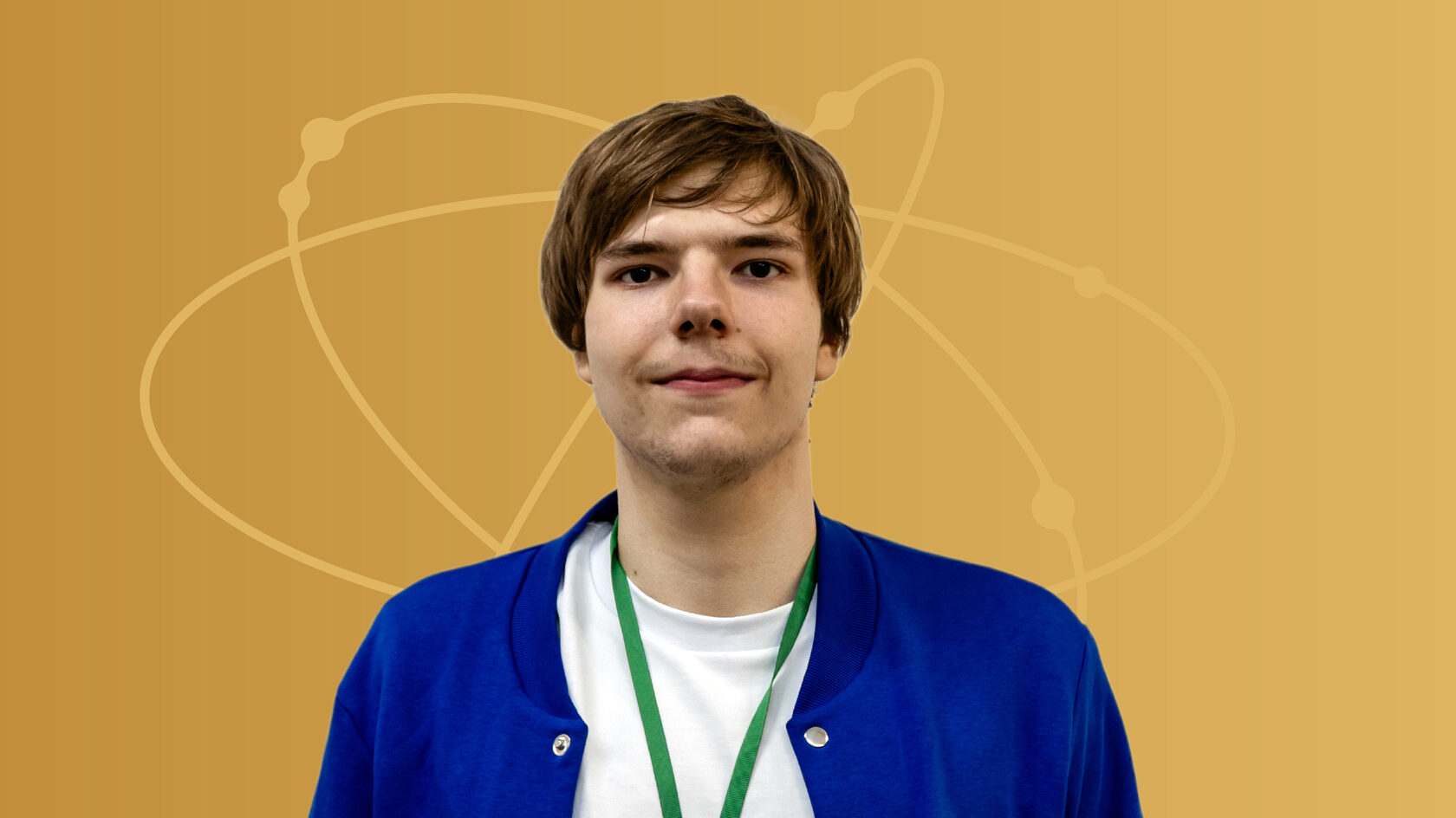
Ahead of IMChO-60, we spoke with last year’s Olympiad participant and gold medalist Viktor Demidov about his experience at the International Mendeleev Olympiad and his studies at the Faculty of Chemistry of Lomonosov Moscow State University, where he was admitted without entrance exams.
How can one qualify for the Mendeleev Olympiad? What is the recipe for success?
To join the Russian national team for the International Mendeleev Olympiad, you need to achieve outstanding results at the final stage of the All-Russian School Olympiad. Typically, 7−8 top 11th-grade students and 2−3 top 10th-grade students are selected. Reading scientific papers and university-level chemistry textbooks, solving past Olympiad problems, and participating in various competitions can significantly improve your chances.
What are your impressions of the 59th Mendeleev Olympiad?
The 59th International Mendeleev Olympiad was amazing. Warm, clear weather in Brazil, the southern starry sky, and participants from 40 countries — we had the chance to meet many of them. The excursion to Ouro Preto was the most memorable part of the trip: beautiful landscapes, diverse plants, and scenic hills. We even managed to spot a toucan for a few seconds — though it flew away quickly.
Do years of preparation for the Olympiad help with studying at MSU’s Faculty of Chemistry?
Yes, absolutely. Years of training help a lot. The entire first-year chemistry program is already familiar to participants of the International Mendeleev Olympiad.
What are your future plans? Are you going into science?
I don’t want to leave the Olympiad world — I hope to return as a teacher or jury member in the competitions I once participated in. At the same time, I want to pursue science. Currently, I work in a laboratory of the Russian Academy of Sciences, studying organosilicon compounds.
What opportunities does the Faculty of Chemistry at MSU provide?
It offers freedom — alongside studying, I can work in a lab, teach talented students, and enjoy life in Moscow. Professors are supportive, especially if you are actively engaged in research.
What advice would you give to a student preparing for Olympiads?
Don’t immerse yourself in chemistry 24/7. Take breaks, go for walks, and spend time with family and friends. Keep it engaging — let chemistry be an exciting passion, not a burden.
How can one qualify for the Mendeleev Olympiad? What is the recipe for success?
To join the Russian national team for the International Mendeleev Olympiad, you need to achieve outstanding results at the final stage of the All-Russian School Olympiad. Typically, 7−8 top 11th-grade students and 2−3 top 10th-grade students are selected. Reading scientific papers and university-level chemistry textbooks, solving past Olympiad problems, and participating in various competitions can significantly improve your chances.
What are your impressions of the 59th Mendeleev Olympiad?
The 59th International Mendeleev Olympiad was amazing. Warm, clear weather in Brazil, the southern starry sky, and participants from 40 countries — we had the chance to meet many of them. The excursion to Ouro Preto was the most memorable part of the trip: beautiful landscapes, diverse plants, and scenic hills. We even managed to spot a toucan for a few seconds — though it flew away quickly.
Do years of preparation for the Olympiad help with studying at MSU’s Faculty of Chemistry?
Yes, absolutely. Years of training help a lot. The entire first-year chemistry program is already familiar to participants of the International Mendeleev Olympiad.
What are your future plans? Are you going into science?
I don’t want to leave the Olympiad world — I hope to return as a teacher or jury member in the competitions I once participated in. At the same time, I want to pursue science. Currently, I work in a laboratory of the Russian Academy of Sciences, studying organosilicon compounds.
What opportunities does the Faculty of Chemistry at MSU provide?
It offers freedom — alongside studying, I can work in a lab, teach talented students, and enjoy life in Moscow. Professors are supportive, especially if you are actively engaged in research.
What advice would you give to a student preparing for Olympiads?
Don’t immerse yourself in chemistry 24/7. Take breaks, go for walks, and spend time with family and friends. Keep it engaging — let chemistry be an exciting passion, not a burden.